
November 16, 2025
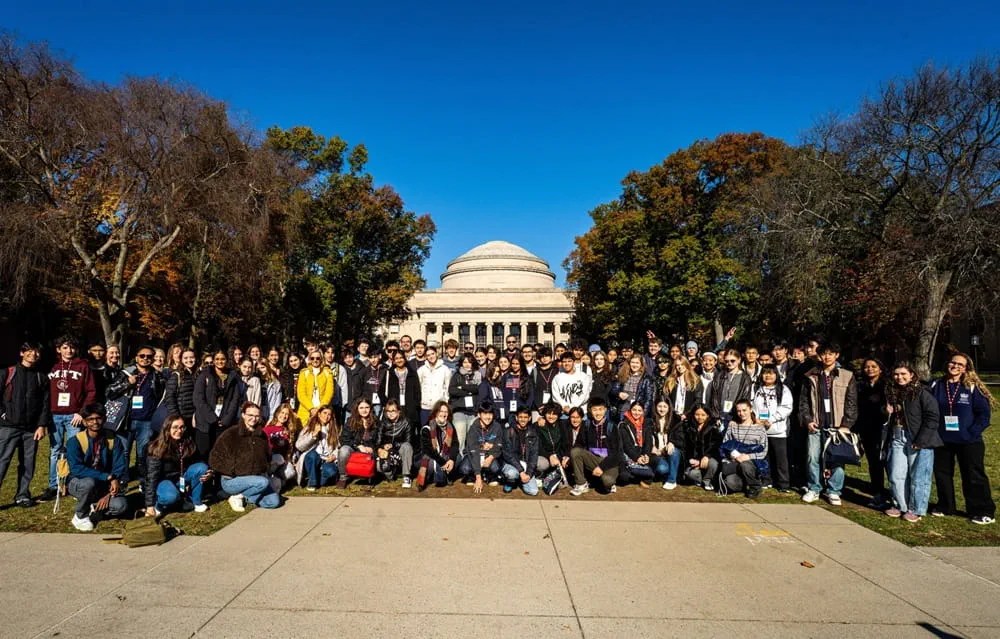
A couple of weeks ago, in early November 2025, I participated in a week-long MIT STEAM trip. Sixty seven students from 55 schools in the school network worldwide took part. I was the only one from my school, and I was chosen because my new power plant design won the competition.
During the program at MIT, we learned what students do in many different labs there.
We visited MIT Arcturus, an autonomous marine robotics team. There we saw different kinds of robots that MIT students, PhD students, and professors built together. Some robots helped with sea research, some flipped oyster nets, and others copied the movements of sea creatures.
In the 2D to 3D lab, we joined a workshop where we made 3D structures using cardboard and paper. I managed to make a few models, including a tower, a dog, a Christmas tree, and more. We also had a tour of the Voxel Lab, which is a lab that creates music in creative ways. We changed different settings on the computer and heard how the sounds changed each time.
The next day, we had a workshop in the Cancer Research Program and did a small experiment to see how cancer cells develop. It was amazing to find out that there were seven Nobel Prize winners working in the same building. One of them was Philip Sharp, who discovered RNA splicing and the identification of split genes.
At MIT we also listened to a talk from Fiona Anstey and James Dingley. Fiona studied archaeology, and she showed us some fossils she brought and explained the process of how they are studied. James showed us his robot and talked about how he got into MIT and how he also became a successful YouTuber. I think their advice was very useful for many of us in the camp who want to go to MIT.
Later we had a debate about global warming. It was really competitive and fun. I was on the conventional energy team, which basically meant all the other teams were arguing against us. Our team definitely didn’t get the support we wanted, but it was still great to spend time with such intelligent students and professors.
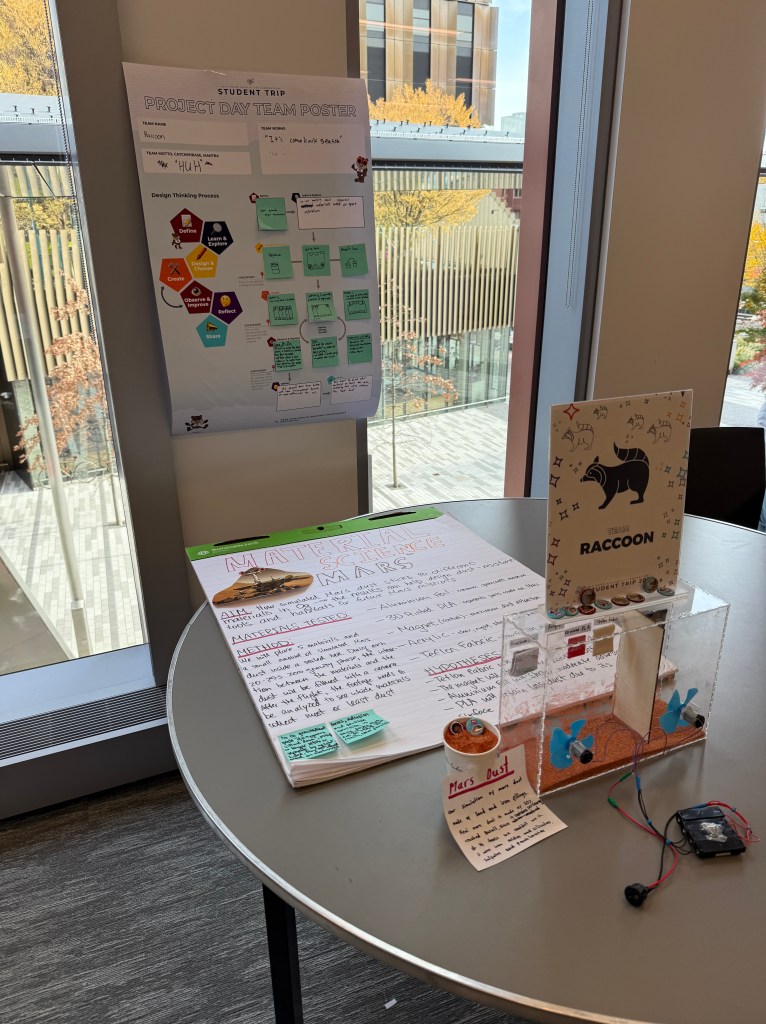
We also designed a mock experiment for the zero-gravity plane that MIT provides for PhD students. There were 17 teams, and only one experiment would actually go on the plane. Our team of four students planned an experiment to test which material would attract the least Martian dust. We chose this topic because we learned that a rover on Mars had trouble moving and seeing because so much dust stuck to it.
We tested several materials, such as acrylic, 3D-printed PLA, a magnet, Teflon fabric, and more. We made “Martian sand” using normal sand and iron filings mixed with colored dye. In the end, our experiment received first place, and it will be going on the zero-gravity plane with MIT PhD students and professors next year!
It is exciting that our idea will be tested by MIT researchers, and I am looking forward to seeing the results. After the MIT program, we also walked around Cambridge, including the Harvard campus. This city is full of excitement.

 Sam's Odyssey 101
Leave a comment